how TAP actually works under the hood


A detailed overview of how I made my TAP projects for AI Agents on Chain.
Last week I introduced TAP — canonical identity and aggregated reputation for fragmented ERC-8004 agents.
This one goes deeper.
I broke down every component: how TAPRegistry derives a deterministic agent ID from a single wallet, how EIP-712 signed bindings connect per-chain identities without depending on any bridge, and how TAPReputationRegistry computes a 0–10,000 basis point score from cross-chain feedback data.
A few things that came out of the design process that I didn't expect:
The soulbound decision — making identity non-transferable — closes an impersonation vector that matters more than I initially thought. AI-enabled scams are 4.5x more profitable than traditional ones. If agent reputation can be sold, it will be.
Persistent slashing was the hardest call. Positive reputation follows active bindings. Negative reputation follows the identity permanently. An agent slashed on Arbitrum can't escape by unbinding and rebinding fresh. That asymmetry is deliberate.
The piece also covers the scoring formula with a worked example, the batch submission system, and the open questions I'm still thinking through — including reputation-gated DeFi and agent-to-agent trust graphs.
 Zaryab Afser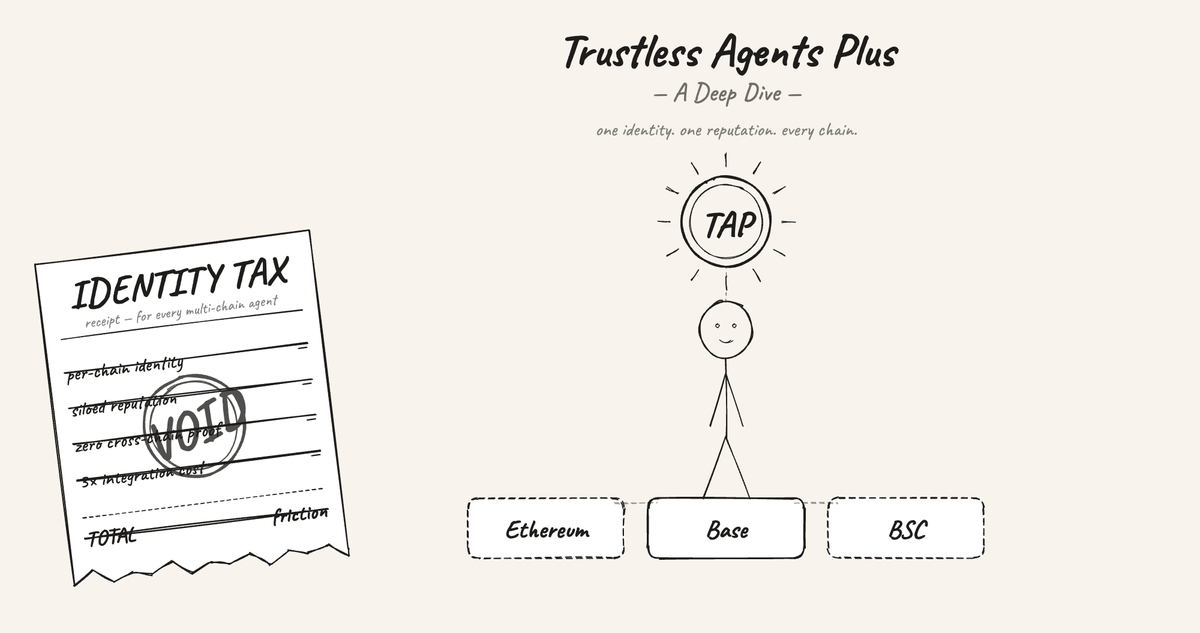
Cheers Decipherers