ai-on-chain
ai-on-chain
ai-on-chain
ai-on-chain
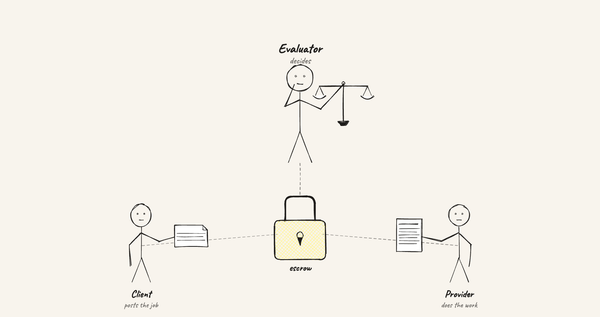
Machines can now hire other machines. Not through API keys, or subscriptions, or a human clicking "approve" on a payment screen. Through an Ethereum standard — with escrow, evaluation, and enforceable service agreements baked into the smart contract. ERC-8183 is the Agentic Commerce Protocol. It defines how an
ai-on-chain
ERC-8004 gave agents an identity. It forgot they live on more than one chain. Three months after launch, the standard has ~200,000 registered agents across 23+ chains. That number reads like adoption. Look closer and it reads like a problem. Every one of those agents is registered on
ai-on-chain
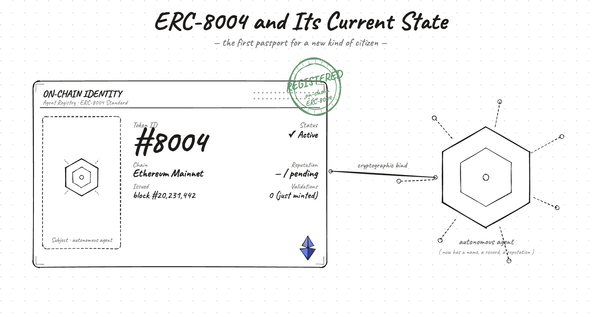
ERC-8004 is not what you think it is. Most people hear "trustless agents" and assume the standard delivers trustlessness out of the box. It does not. What it delivers is something more modest and — honestly — more useful at this stage: a coordination primitive that gives AI agents
ai-on-chain
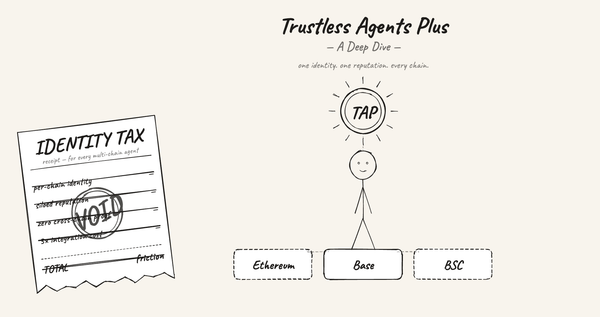
A detailed overview of how I made my TAP projects for AI Agents on Chain. Last week I introduced TAP — canonical identity and aggregated reputation for fragmented ERC-8004 agents. This one goes deeper. I broke down every component: how TAPRegistry derives a deterministic agent ID from a single wallet,
ai-on-chain
AI agents have an multi-chain identity crisis. A crisis where the same agent exists as three different entities on three different chains and no on-chain mechanism can prove they are the same. ERC-8004 gave AI agents on-chain identity. Over 200,000 agents are now registered across
Simplifying Web3 and Tech for all
ERC-8004 agents are fragmented. Not in theory. In production. There are ~200K agents registered across 23+ chains right now. Each one has an identity token, a reputation score, and a validation surface — all locked to a single chain's registry. An agent on Base has no on-chain
Note: Read the previous part before starting: 1. Part-0, 2 Part-1 ( must-read ) With Part 1 of this article series, you've already internalized the fundamentals of ABI encoding. We’re now ready to move deeper into complex structures that Solidity developers use every day: structs, arrays,
For Solidity developers, ABI Encoding/Decoding is THE topic to master. It's one of those topics that separates you from the rest - makes you a 10x solidity dev. On the other hand, it's a topic that could be very difficult to grasp. It's one
Solidity is EASY. It's a simple and beautiful language. With the rise of excellent educational resources, courses, dev-tools, and LLMs, learning and writing Solidity has never been easier. But here's the hard truth — if it's easy for everyone to get started, it'
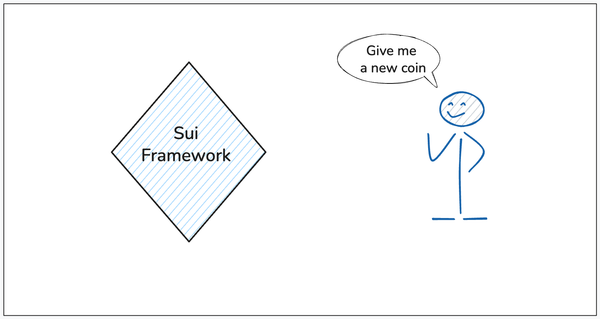
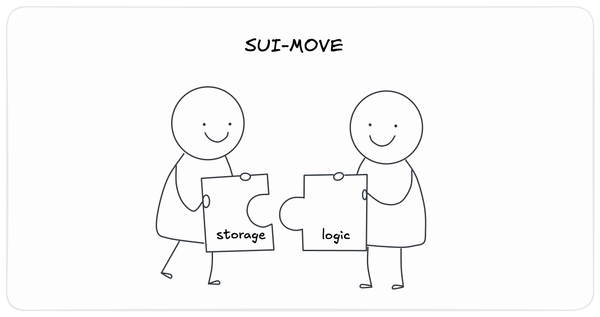
I recently tried a new smart contract language, MOVE. The language is inspired by Rust, so it's not intuitive for Solidity devs. However, it's super fun to build with. In this article series, I aim to provide an introduction to the Move language and its features.
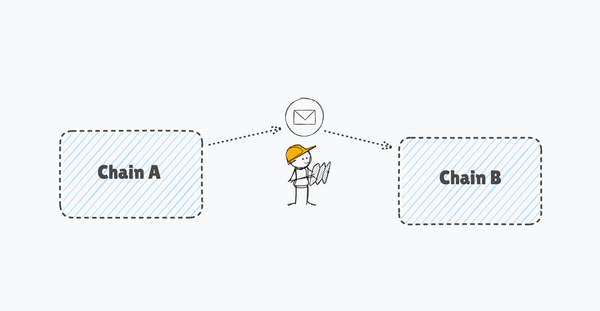
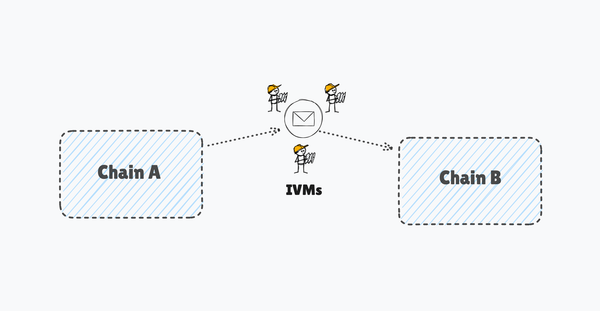
Special Thanks to Matt, Peter, Jasper and Mario from SEDA team, & Nam, Paul from Hyperlane team for a detailed review & feedback on the articles. The cross-chain world is evolving faster than you think. We have now officially entered the era of Interop 3.0. An era of
Special Thanks to Matt, Peter, Jasper and Mario from SEDA team for a detailed review & feedback on the articles. In the first part of this article, I made some strong arguments on: * the shift toward modular stacks, * how modularization creates specialists, * the rise of Verification marketplaces and verification specialists,
I wrote an X post that gained amazing traction and great insights. So much so, that I felt compelled to write this article. The post has a high signal-to-noise ratio; it was a discussion fueled by honest opinions & insights from some of the best minds in the
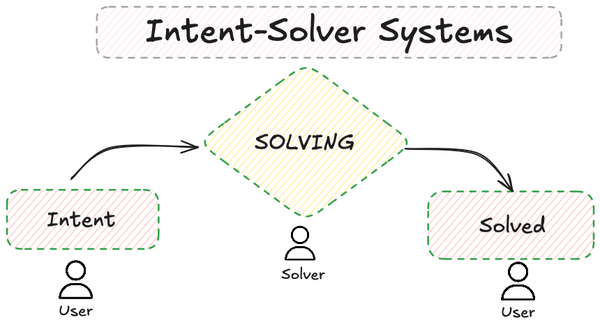
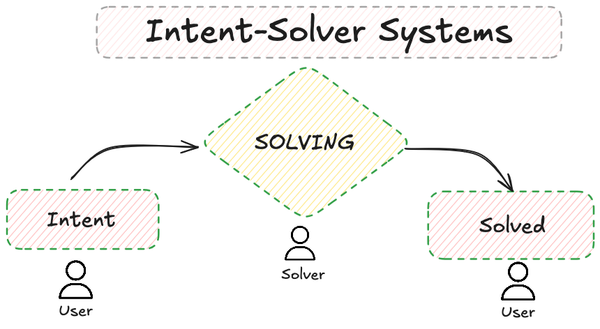
Intent-solver systems are the silent engine behind Chain Abstraction. This is an extensive guide to understanding how intent solver system works.
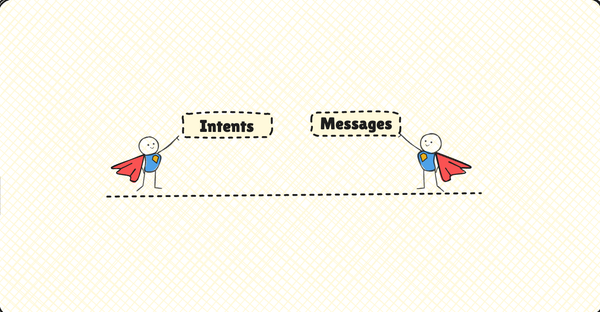
A major shift in Web3 interoperability is around the corner. We are witnessing a massive change in how value is transferred between chains. The shift has already begun, but this is only the beginning. I have used and studied both interop models as a user and a researcher/developer—adequately
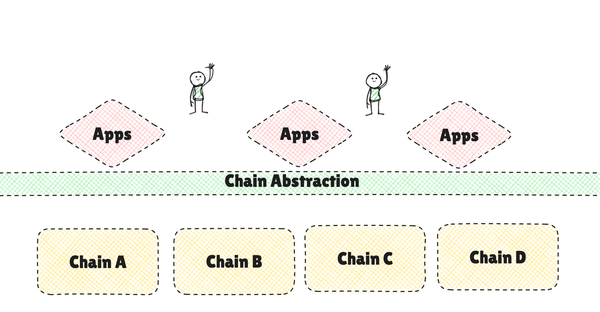
Chain abstraction is not what you think. It isn't your fault. It's easy to form wrong mental models in web3. Every new narrative brings along waves of new tweets, podcasts, articles, and typical CT debates that shape your understanding. The current hot narrative is Chain Abstraction.